Artificial intelligence is no longer something businesses only test in side projects or innovation labs. It is becoming part of everyday operations, especially in areas where teams handle large volumes of repetitive work, make frequent decisions, or rely on scattered data. Recent McKinsey research shows organisations are using AI across more business functions than before, with especially strong growth in generative AI adoption.
That shift matters because the biggest gains from AI usually do not come from flashy demos. They come from practical improvements inside real workflows, routing requests faster, extracting data from documents, improving forecasts, helping support teams respond more efficiently, and giving finance leaders better visibility.
For most businesses, the real question is not whether AI matters. It is where to apply it first so it creates measurable value without adding unnecessary complexity.
Below are five practical AI use cases that can improve efficiency, reduce manual work, and support better decisions across operations, finance, sales, and customer support.
1. Intelligent ticket routing and task assignment
The challenge
In many organizations, requests arrive through email, chat, forms, or internal systems and then wait for someone to sort and assign them. That slows response times, creates inconsistency, and increases the chance that urgent issues are missed or sent to the wrong team.
The AI approach
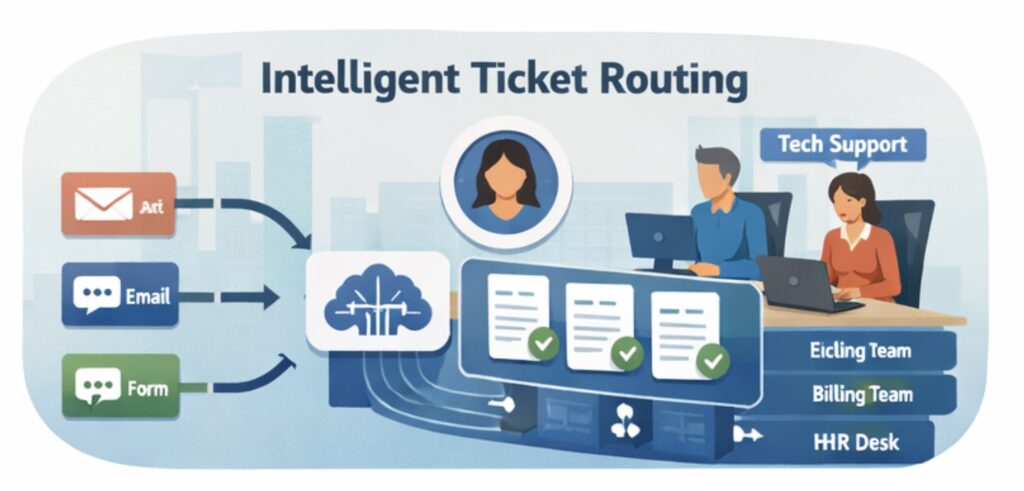
AI can help by reading incoming requests, identifying the issue, understanding intent, and routing the ticket to the right team or person. Instead of relying only on fixed rules or keyword triggers, modern language models can evaluate the context of a message and classify it more accurately. Microsoft describes retrieval and language based systems as useful for complex, conversational use cases where relevance and grounded answers matter. This kind of routing can help teams reduce manual triage, improve response times, and distribute work more efficiently. It is especially useful for support desks, operations teams, and shared service functions where request volume is high.
Example
A service business receiving large volumes of support and operations requests can use AI to identify the request type, detect urgency, extract important details, and assign the task automatically to the right queue.
2. Automated document extraction and validation
The challenge
Finance, legal, and operations teams still spend too much time pulling information from invoices, receipts, purchase orders, forms, and contracts. Manual entry is slow, repetitive, and vulnerable to mistakes.
The AI approach
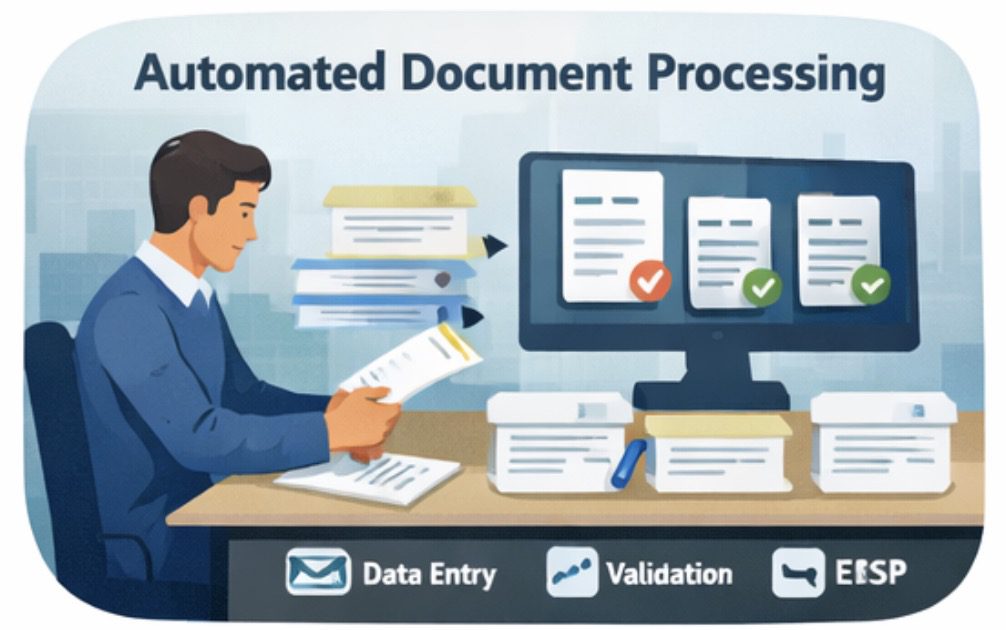
Modern document processing tools can read documents, extract relevant fields, and turn unstructured content into structured data that can be used in downstream systems. Google Cloud describes Document AI as a platform that extracts, classifies, and structures document data to automate document workflows.This reduces manual entry, speeds up processing, and improves consistency. It can also support validation checks, for example flagging missing fields, mismatched purchase order numbers, or incomplete submissions before the data moves further into the workflow.
Example
An accounts payable team receiving invoices in different layouts can use AI to capture invoice number, date, amount, vendor details, and tax values, then validate the data before it is posted into the finance system.
3. Demand forecasting and resource planning
The challenge
Operations teams often have to make decisions on inventory, staffing, scheduling, and capacity using spreadsheets and historical trends. That works to a point, but it becomes unreliable when demand shifts quickly or several variables change at once.
The AI approach
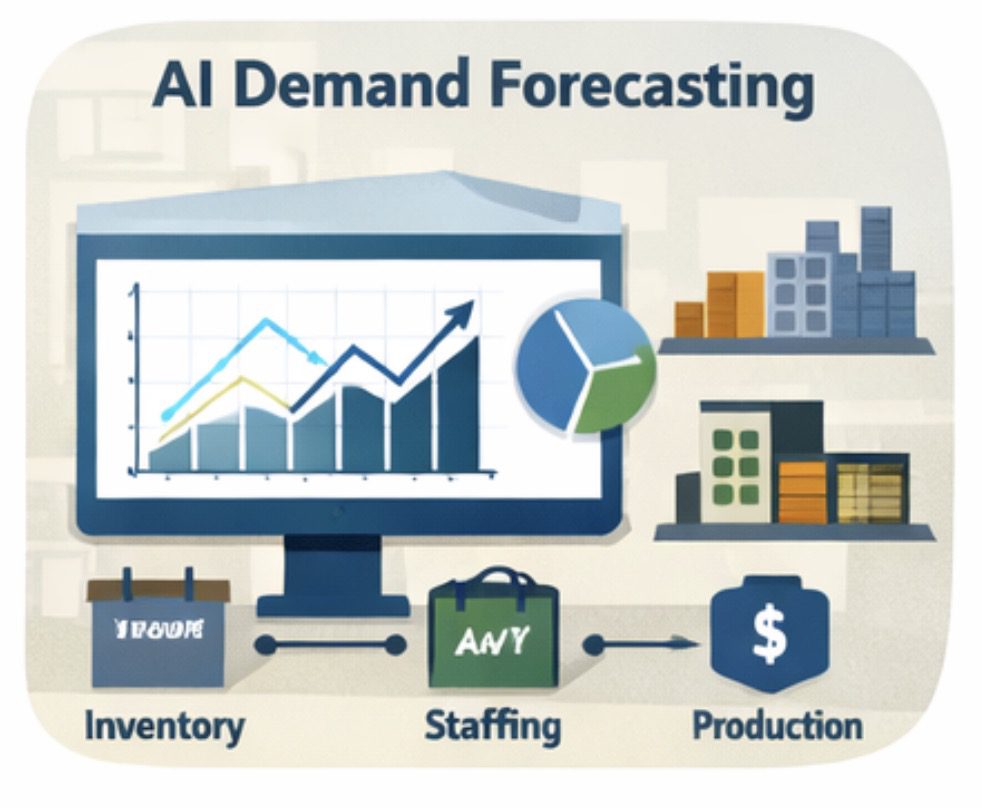
AI models can help forecast demand by analyzing historical patterns alongside more current operational data. In practice, this gives teams a more dynamic view of what may happen next rather than relying only on what happened in the past. Better forecasting supports smarter inventory planning, more accurate staffing, and better resource allocation. It also helps businesses respond earlier when demand starts to rise, fall, or change unexpectedly.
Example
A company with seasonal sales swings can use AI forecasting to plan inventory purchases and staffing more accurately instead of reacting after the demand spike has already happened.
4. Conversational AI for frontline support
The challenge
Customer support teams handle a high volume of repetitive questions every day, order status, password resets, account access, billing questions, and other routine requests. When human agents spend most of their time on basic queries, complex issues take longer to resolve and support costs rise.
The AI approach
Modern conversational AI can answer common questions, guide users through simple tasks, and hand off more complex cases to human agents when needed. A major reason these systems have improved is the use of retrieval augmented generation, or RAG, which connects language models to trusted business content so responses are grounded in company specific information instead of generic model memory. Microsoft defines RAG as a pattern that combines search with large language models so responses are grounded in your data. This can improve first response time, extend support availability beyond business hours, and reduce the volume of routine tickets reaching the team. It also gives human agents more time to focus on higher value conversations.
Example
A business can use a website chatbot to answer common service questions, help customers find account information, and escalate more complex cases with the conversation history already attached.

5. Cash flow and revenue forecasting
The challenge
Finance leaders need a reliable view of future cash flow and revenue, but traditional forecasting often depends on static assumptions, manual updates, and partial visibility into what is changing in the business.
The AI approach
AI can improve forecasting by combining multiple data sources, such as pipeline data, payment history, seasonality, and customer trends, into a more responsive forecasting model. NIST defines AI systems broadly as machine based systems that can make predictions, recommendations, or decisions based on human defined objectives, which fits well with forecasting and financial planning use cases. This gives finance teams a stronger basis for working capital planning, budgeting, and scenario analysis. Instead of relying only on static reports, leaders can monitor changing patterns and adjust decisions earlier.
Example
A growing business with uneven customer payment cycles can use AI to improve short term cash flow forecasting and identify potential gaps before they become urgent.

Start with value, not complexity
The most successful AI projects usually begin with a simple question, where are we losing time, consistency, or visibility today?
That is where AI tends to create the fastest business value. It works best when applied to processes that are repetitive, data heavy, and easy to measure. In many cases, the right first project is not the most advanced one. It is the one that solves a clear operational problem and fits naturally into an existing workflow.
For many businesses, good starting points include document extraction, ticket routing, support automation, or forecasting improvements. These are practical use cases with clear business outcomes and realistic implementation paths.
Final thought
AI does not need to be overcomplicated to be useful. When applied to the right workflows, it can reduce manual work, improve accuracy, speed up response times, and support better decisions across operations, finance, sales, and customer support.
At Inventh, we focus on practical AI solutions that fit real business processes, integrate with existing systems, and create measurable value over time.